Wednesday

Gene discovered that reduces risk of stroke

Scientists have discovered a gene that protects people against one of the major causes of stroke in young and middle-aged adults and could hold the key to new treatments.

Researchers from Royal Holloway, University of London, together with an international team from across the United States and Europe, have found that people with a specific variant of a gene, known as PHACTR1, are at reduced risk of suffering cervical artery dissection, which is caused by a tear in an artery that leads to the brain.

The new discovery, published in the journal Nature Genetics, could lead to new treatments and prevention strategies for the disease, which is a major cause of stroke in young adults. The same gene variant has also been identified as a protector against migraines and affects the risk of heart attack.

Professor Pankaj Sharma, from the School of Biological Sciences at Royal Holloway, said: "This is an important breakthrough. Our findings provide us with a greater understanding of how this region of the genome appears to influence key vascular functions, which could have major implications for the treatment of these severe and disabling conditions. "
In the largest study of its kind ever undertaken, researchers from around the world screened the entire genome of 1,400 patients with cervical artery dissection, along with 14,400 people without the disease. Cervical artery dissection can lead to compression of adjacent nerves and to blood clotting, potentially causing blockage of vessels and brain damage.

Professor Sharma, Professor of Clinical Neurology at Royal Holloway, added: "Further genetic analyses and worldwide collaborations of this kind provide hope of pinpointing the underlying mechanisms that cause stroke. The Bio-Repository of DNA in Stroke (BRAINS) study I am leading is creating a large stroke DNA biobank which will give an exciting opportunity to identify the genes directly linked to the condition."

Selengkapnya »»  

Boy moms more social in chimpanzees: Watching adult males in action may help youngsters prepare

Infant chimpanzee in Gombe National Park, Tanzania. Nearly four decades of observations of Tanzanian chimpanzees has revealed that the mothers of sons are about 25 percent more social than the mothers of daughters. Boy moms were found to spend about two hours more per day with other chimpanzees than the girl moms did.
Nearly four decades of observations of Tanzanian chimpanzees has revealed that the mothers of sons are about 25 percent more social than the mothers of daughters. Boy moms were found to spend about two hours more per day with other chimpanzees than the girl moms did.

Chimpanzees have a male-dominated society in which rank is a constant struggle and females with infants might face physical violence and even infanticide. It would be safer in general to just avoid groups where aggressive males are present, yet the mothers of sons choose to do so anyway.

"It is really intriguing that the sex of her infant influences the mother's behavior right from birth and that the same female is more social when she has a son than when she has a daughter," said Anne Pusey, chair of Evolutionary Anthropology at Duke.

The researchers believe that the mothers are giving the young males the opportunity to observe males in social situations, even while still clinging to their mothers. This gives the youngsters a start on developing the social skills they'll need to thrive in the competitive world of adults.

The findings are based on an analysis of 37 years of daily observations of East African chimpanzeess from the Gombe National Park in Tanzania. Duke University houses all of the data from the famous Kasekela chimpanzee community in the Jane Goodall Institute Research Center, which contains more than 50 years of observational data all the way back to Jane Goodall's first hand-written observations from the early 1960s.

The data largely consist of "follows," in which a researcher focuses on one chimpanzee and notes her behaviors and interactions with others throughout the day. Duke scholars led by Pusey are now working on digitizing the entire collection of Gombe data in the Goodall archive to enable more longitudinal studies of this kind.

"Drawing from the long-term datasets, we were able to investigate patterns within the same mother, examining how she behaved with her sons versus with her daughters," said lead author Carson Murray, an assistant professor at George Washington University, who was a PhD student under Pusey. "These results are even more compelling than a general pattern, demonstrating that the same female behaves very differently depending on the sex of her offspring."

For this study, researchers measured gregariousness based on three kinds of analyses. They looked at how much time a mother spent with other adults who were not immediate family members; the average size of the mother's party and its composition; and the proportion of time a mother spent in mixed-sex and female-only parties.

For the most part, mothers with offspring spend their time alone or with adult daughters and other dependents. Adult males are the more gregarious sex, forming coalitions with other males to assert rank, defend their territory and hunt as a group.

Mothers with sons were found to spend more time with others and to associate with more of their kin. During the first six months of an infant's life, mothers with sons spend significantly more time in mixed-sex parties than mothers with daughters.

At 30 to 36 months, chimpanzee infants start moving around more on their own without being carried and spend most of their time out of mother's reach. At this age, the male infants start having more interactions with unrelated chimpanzees, especially adult males. Their female counterparts are significantly less social.

As the offspring get older and range further from their mothers, the young males have more social partners over the course of the day. Juvenile and adolescent males watch their adult counterparts carefully and often mimic the behaviors they see, including charging displays and copulation.

"Mothers obviously increase social exposure for their young male infants," Murray said. "This finding leads to a larger question about how social exposure might shape gender-typical behavior in humans as well."

This study also suggests it is possible the sons themselves are driving the increased gregariousness later in life. In early infancy, the boy mothers spend about the same time in female-only groups that the girl moms do. But as their sons become older, boy moms spend more time in female-only, nursery groups, probably because the young males are attracted to the offspring of other females as playmates.

"One of the most surprising results to me was that mothers with young females still have lower association with their relatives," Murray said. "As we argue in the paper, this suggests that social exposure is less critical to females in general."
Social exposure has a potential downside too. Females with low rank are known to experience more social stress in large groups, and there is always a risk of infanticide against the young chimpanzees. Perhaps the best way to avoid having infants killed is to steer clear of groups, which the mothers do up to 70 percent of the time.

"Mothers with infant daughters were likely to be avoiding competitive and stressful situations," Murray said. "While mothers with sons seem willing to incur those costs for the benefit of having their sons socialized."

Selengkapnya »»  

Underwater robot sheds new light on thick, deformed, Antarctic sea ice

The first detailed, high-resolution 3-D maps of Antarctic sea ice have been developed using an underwater robot. Scientists from the UK, USA and Australia say the new technology provides accurate ice thickness measurements from areas that were previously too difficult to access.

The results, published this week in the journal Nature Geoscience (Monday 24 November 2014), step up the pace of research in the polar regions aimed at understanding the dramatic sea ice changes in the context of climate change.

Scientists use a range of technologies and techniques to measure sea ice thickness. Satellite observations can measure large-scale thickness from space, but interpreting the data accurately can be difficult due to snow cover on the ice. Measurements made on the sea ice by drilling holes, together with visual observations from ships are critical for building a more complete picture, but difficulties in getting access to thicker areas of sea ice leaves gaps in the data. Now, with the Autonomous Underwater Vehicle (AUV) known as SeaBED, scientists have an invaluable new tool to fill this gap.

While most oceanographic survey instruments look down at the seafloor, SeaBED was fitted with an upward-looking sonar in order to measure and map the underside of sea ice floes. The AUV operated at a depth of 20 to 30 meters and was driven in a lawnmower pattern. These lines of data were merged to form high-resolution 3D bathymetric surveys of the underside of the ice.

The yellow SeaBED robot, which is approximately two meters long and weighs nearly 200 kilograms, has a twin-hull design that gives the robot enhanced stability for low-speed photographic surveys.

"Putting an AUV together to map the underside of sea ice is challenging from a software, navigation and acoustic communications standpoint," says Hanumant Singh, an engineering scientist at the Woods Hole Oceanographic Institution (WHOI) whose lab designed, built and operated the AUV.

"SeaBED's maneuverability and stability made it ideal for this application where we were doing detailed floe-scale mapping and deploying, as well as recovering in close-packed ice conditions. It would have been tough to do many of the missions we did, especially under the conditions we encountered, with some of the larger vehicles."

Co-author Dr Guy Williams from Institute of Antarctic and Marine Science adds:

"The full 3-D topography of the underside of the ice provides a richness of new information about the structure of sea ice and the processes that created it. This is key to advancing our models particularly in showing the differences between Arctic and Antarctic sea ice."

The data from SeaBED, combined with airborne measurements of sea-ice surface elevation, ice coring surveys, and satellite observations, vastly improves scientists' estimates of ice thickness and total sea ice volume.

Co-author Dr Jeremy Wilkinson from British Antarctic Survey (BAS) says, "The AUV missions have given us a real insight into the nature of Antarctic sea ice -- like looking through a microscope. We can now measure ice in far greater detail and were excited to measure ice up to 17 metres thick."

The team deployed AUVs as part of two Antarctic cruises (IceBell and SIPEX-2) in 2010 and 2012 in the austral spring. First on the British Antarctic Survey's RRS James Clark Ross and the second on the Australian icebreaker the RSV Aurora Australis. Three locations around the Antarctic Peninsula were mapped -- the Weddell, Bellinghausen and Wilkes Land sectors covering an area of 500,000 square metres, the size of 100 football pitches.

The next steps are for the scientists to do large-scale surveys that can be compared to large-scale observations from aircraft and satellites.

"What this effort does is show that observations from AUVs under the ice are possible and there is a very rich data set that you can get from them," says Ted Maksym, a WHOI scientist and co-author of the paper. "This work is an important step toward making the kinds of routine measurements we need in order to really monitor and understand what's happening with the ice and the large scale changes that are occurring."

Selengkapnya »»  

Avoiding ecosystem collapse: Experts Weigh in

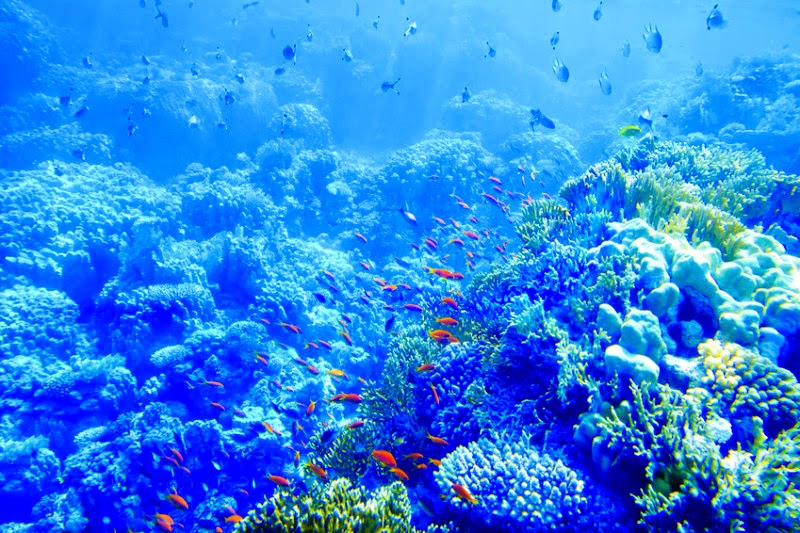
Underwater ecosystem (stock image). "In a sea of tipping points, identifying, anticipating, and reacting to sudden ecosystem changes will be critical as we seek to maintain the delivery of the goods and services from our oceans," says co-author Phil Levin, a fisheries biologist at the National Oceanic and Atmospheric Administration (NOAA).
From coral reefs to prairie grasslands, some of the world's most iconic habitats are susceptible to sudden collapse due to seemingly minor events. A classic example: the decimation of kelp forests when a decline of otter predation unleashes urchin population explosions. Three studies published in the Nov. 24 special issue of Philosophical Transactions of the Royal Society Biological Science hold the promise of helping resource managers predict, avoid, and reverse the tipping points that lead to degraded habitats, economic losses, and social upheaval.

The studies are the initial findings of the Ocean Tipping Points Project, an international research collaboration.
"In a sea of tipping points, identifying, anticipating, and reacting to sudden ecosystem changes will be critical as we seek to maintain the delivery of the goods and services from our oceans," says co-author Phil Levin, a fisheries biologist at the National Oceanic and Atmospheric Administration (NOAA).

In the first study, scientists from the Center for Ocean Solutions at Stanford University and the Environmental Defense Fund evaluated 51 case studies around the globe. They found that successful management of systems with known tipping points depends strongly on three factors: consistent monitoring, explicit incorporation of tipping points data into management actions, and management at small geographic scales. The authors conclude that areas of approximately 6,500 mi2 (17,000 km2, roughly twice the area of Yellowstone National Park) or less are easier to understand, monitor, and manage at the local scale.

"Managers who use tipping points science are achieving positive results for virtually every kind of ecosystem," said co- author Ashley Erickson, policy and education manager with the Center for Ocean Solutions at Stanford. "The findings of our study can help resource managers focus and prioritize their efforts."

The second study, authored by researchers from NOAA and the University of Hamburg, provides additional guidance for marine managers on how to incorporate the risk of reaching a tipping point into current ecosystem-based management frameworks. The authors demonstrate how to adapt NOAA's widely used Integrated Ecosystem Assessment (IEA) framework for marine ecosystems where tipping points are a concern. This risk-analysis based approach helps managers determine the likelihood that an ecosystem will cross a threshold, and what the resulting socio-economic and environmental impacts might be.

In the third study, researchers from the Center for Ocean Solutions, Stockholm Resilience Centre, University ofai`i, NOAA, and the Scripps Institute of Oceanography used a comprehensive global dataset to identify three distinct and stable regimes of Hawaiian Archipelago reef ecosystems: hard corals, turf algae, or macroalgae. Though some algal cover is natural, algae-dominated reefs are the degraded remains of once-diverse coral communities. More than half of Hawaii's reefs are currently in the algae-dominated regime, thanks to overfishing and nutrient pollution.

"To safeguard Hawaii's coral reefs, we need to increase herbivore populations and decrease other human stressors, such as land run-off, that encourage the growth of algae," states lead author Jean-Baptiste Jouffray of the Stockholm Resilience Centre. "By quantifying tipping points this study offers tangible targets for just how much those stressors need to be reduced to avoid regime shifts in healthy reefs and restore those already in decline. For managers working with limited funds and resources, this is critical information."

Selengkapnya »»  

Asteroid impacts on Earth make structurally bizarre diamonds

Diamond grains from the Canyon Diablo meteorite. The tick marks are spaced one-fifth of a millimeter (200 microns) apart.
Scientists have argued for half a century about the existence of a form of diamond called lonsdaleite, which is associated with impacts by meteorites and asteroids. A group of scientists based mostly at Arizona State University now show that what has been called lonsdaleite is in fact a structurally disordered form of ordinary diamond.

The scientists' report is published in Nature Communications, Nov. 20, by Péter Németh, a former ASU visiting researcher (now with the Research Centre of Natural Sciences of the Hungarian Academy of Sciences), together with ASU's Laurence Garvie, Toshihiro Aoki and Peter Buseck, plus Natalia Dubrovinskaia and Leonid Dubrovinsky from the University of Bayreuth in Germany. Buseck and Garvie are with ASU's School of Earth and Space Exploration, while Aoki is with ASU's LeRoy Eyring Center for Solid State Science.

"So-called lonsdaleite is actually the long-familiar cubic form of diamond, but it's full of defects," says Péter Németh. These can occur, he explains, due to shock metamorphism, plastic deformation or unequilibrated crystal growth.

The lonsdaleite story began almost 50 years ago. Scientists reported that a large meteorite, called Canyon Diablo after the crater it formed on impact in northern Arizona, contained a new form of diamond with a hexagonal structure. They described it as an impact-related mineral and called it lonsdaleite, after Dame Kathleen Lonsdale, a famous crystallographer.
Since then, "lonsdaleite" has been widely used by scientists as an indicator of ancient asteroidal impacts on Earth, including those linked to mass extinctions. In addition, it has been thought to have mechanical properties superior to ordinary diamond, giving it high potential industrial significance. All this focused much interest on the mineral, although pure crystals of it, even tiny ones, have never been found or synthesized. That posed a long-standing puzzle.

The ASU scientists approached the question by re-examining Canyon Diablo diamonds and investigating laboratory samples prepared under conditions in which lonsdaleite has been reported.

Using the advanced electron microscopes in ASU's Center for Solid State Science, the team discovered, both in the Canyon Diablo and the synthetic samples, new types of diamond twins and nanometer-scale structural complexity. These give rise to features attributed to lonsdaleite.

"Most crystals have regular repeating structures, much like the bricks in a well-built wall," says Peter Buseck. However, interruptions can occur in the regularity, and these are called defects. "Defects are intermixed with the normal diamond structure, just as if the wall had an occasional half-brick or longer brick or row of bricks that's slightly displaced to one side or another."

The outcome of the new work is that so-called lonsdaleite is the same as the regular cubic form of diamond, but it has been subjected to shock or pressure that caused defects within the crystal structure.

One consequence of the new work is that many scientific studies based on the presumption that lonsdaleite is a separate type of diamond need to be re-examined. The study implies that both shock and static compression can produce an intensely defective diamond structure.

The new discovery also suggests that the observed structural complexity of the Canyon Diablo diamond results in interesting mechanical properties. It could be a candidate for a product with exceptional hardness.

Selengkapnya »»  

Tuesday

Cooling with the coldest matter in the world

A cloud of ultracold atoms (red) is used to cool the mechanical vibrations of a millimeter-sized membrane (brown, in black frame). The mechanical interaction between atoms and membrane is generated by a laser beam and an optical resonator (blue mirror).
Physicists at the University of Basel have developed a new cooling technique for mechanical quantum systems. Using an ultracold atomic gas, the vibrations of a membrane were cooled down to less than 1 degree above absolute zero. This technique may enable novel studies of quantum physics and precision measurement devices, as the researchers report in the journal Nature Nanotechnology.

Ultracold atomic gases are among the coldest objects in existence. Laser beams can be used to trap atoms inside a vacuum chamber and slow down their motion to a crawl, reaching temperatures of less than 1 millionth of a degree above absolute zero -- the temperature at which all motion stops. At such low temperatures, atoms obey the laws of quantum physics: they move around like small wave packets and can be in a superposition of being in several places at once. These features are harnessed in technologies such as atomic clocks and other precision measurement devices.

An ultracold atomic fridge

Can these ultracold gases also be used as refrigerants, to cool other objects to very low temperatures? This would open up many possibilities for the investigation of quantum physics in new and potentially larger systems. The problem is that the atoms are microscopically small and even the largest clouds produced thus far, which consist of several billion ultracold atoms, still contain far fewer particles than something as small as a grain of sand. As a result, the cooling power of the atoms is limited.

A team of University of Basel researchers led by Professor Philipp Treutlein has now succeeded in using ultracold atoms to cool the vibrations of a millimeter-sized membrane. The membrane, a silicon nitride film of 50 nm thickness, oscillates up and down like a small square drumhead. Such mechanical oscillators are never fully at rest but show thermal vibrations that depend on their temperature. Although the membrane contains about a billion times more particles than the atomic cloud, a strong cooling effect was observed, which cooled the membrane vibrations to less than 1 degree above absolute zero.

"The trick here is to concentrate the entire cooling power of the atoms on the desired vibrational mode of the membrane," explains Dr. Andreas Jöckel, a member of the project team. The interaction between atoms and membrane is generated by a laser beam. As the physicist explains: "The laser light exerts forces on the membrane and atoms. Vibration of the membrane changes the light force on the atoms and vice versa." The laser transmits the cooling effect over distances of several meters, so the atomic cloud does not have to be in direct contact with the membrane. The coupling is amplified by an optical resonator consisting of two mirrors, between which the membrane is sandwiched.

The first experiment of its kind worldwide

Systems that use light to couple ultracold atoms and mechanical oscillators have already been proposed theoretically. The experiment at the University of Basel is the first worldwide to realize such a system and use it to cool the oscillator. Further technical improvements should make it possible to cool the membrane vibrations to the quantum-mechanical ground state.
For the researchers, cooling the membrane with the atoms is only the first step: "The well-controlled quantum nature of the atoms combined with the light-induced interaction is opening up new possibilities for quantum control of the membrane," says Treutlein. This may enable fundamental quantum physics experiments with a relatively macroscopic mechanical system, visible to the naked eye. It may also be possible to generate what are known as entangled states between atoms and membrane. These would allow measurement of membrane vibrations with unprecedented precision, which in turn could enable the development of new kinds of sensors for small forces and masses.

The experiments at the University of Basel were co-funded by the European Union and are part of the National Center of Competence in Research in Quantum Science and Technology (NCCR QSIT) and the Swiss Nanoscience Institute (SNI).

Selengkapnya »»  

Bad news for kids: Parents do not defend their offspring at all cost, bird study shows

Blue tit parents weighs the risks for themselves before defending their offspring.
Do parents defend their offspring whenever necessary, and do self-sacrificing parents really exist? To answer this question, researchers of the University of Veterinary Medicine, Vienna examined defence behaviours of parent blue tits. They investigated whether birds would risk everything to protect their young from predators. Their conclusion: parents weigh the risks. It is not only the risk to the nestlings, but also their own risk that plays a role when defending their nests. The results were published in the journal Proceedings of the Royal Society B.

The degree to which parents sacrifice themselves for their children depends on a variety of factors. On the one hand nest predators pose a threat to the young and the parent birds. But also the time of hatching plays a role. Earlier studies have shown that birds born late in the season are more likely to be protected by their parents, as the adult birds often do not have the chance to produce replacement clutches. Older offspring also tend to be protected more readily than younger ones, as much more parental care and energy have already been invested.

"Studies on the risk behaviour of birds already exist. But there are only a few in which several factors have been investigated at the same time. We are upon the first showing how parents respond to more or less dangerous predators when defending offspring of different ages in the field says first author Katharina Mahr.

Risk research using predator models

Together with Herbert Hoi from the Konrad Lorenz Institute of Ethology they observed blue tit parents defending their nestlings aged between five and twelve days. The parents were confronted with different predators of varying threat levels. A stuffed sparrowhawk represented a predator with great risk to adult blue tits. A sparrowhawk is not considered dangerous for very young blue tits, as it cannot reach into the nest-box. However, sparrowhawks become more relevant predators for older nestlings. A rubber snake represented a predator of medium risk. Snakes are very dangerous for the young, but due to their low mobility represent a low risk to parents. A stuffed woodpecker was used as a third predator. Woodpeckers are able to open nest-boxes and therefore represent the greatest danger to very young nestlings, but not to older juveniles.

When exposed to a snake, blue tit parents attacked the predator. Since alarm calls against snakes have little effect, as snakes don't hear those calls, parents rather attack the enemy. Furthermore, snakes are less mobile than birds. A targeted attack is therefore the best choice with the lowest risk for the parents.

Direct attacks on predators are, according to Mahr, the riskiest behaviour bird parents can exhibit. When exposed to the sparrowhawk or the woodpecker, the parents neither attacked nor approached the predators. Instead, the parents responded with loud alarm calls. "Attacking a sparrowhawk is life-threatening for blue tits," Mahr points out. "That's why they probably do not attack. Their own risk is too high."

Blue tits keep cool

"Defence behaviour is apparently not based on rash decisions, but is subject to a cascade of considerations," Mahr concludes. The age of the nestlings seems to play a role in the less risky alarm calling strategy. Parents warned their twelve-day-old nestlings more often using alarm calls than their five-day-old offspring.

Moreover, nestlings are extremely dependent on their parents. "Self-sacrifice only happens, when the nestlings are able to survive on their own. Otherwise the sacrifice makes no sense," Mahr explains. "That's probably why parents defend older offspring more vigorously than young."

"Our findings could have general implications for the economy of risk management and decision-making strategies in living beings including humans. Humans do react rashly at times. But probably unconscious decisions don't always turn out to be the worst," says Mahr.

In the future, Mahr and Hoi would like to filter out the differences, if any, between maternal and paternal behaviours. The data have already been collected and must now be evaluated.

This study was based on field observations by Julia Thoma, who provided the first data for this project as part of her pre-academic paper for the project Sparkling Science.

Selengkapnya »»  

Enabling biocircuits: New device could make large biological circuits practical

Researchers have made great progress in recent years in the design and creation of biological circuits -- systems that, like electronic circuits, can take a number of different inputs and deliver a particular kind of output. But while individual components of such biological circuits can have precise and predictable responses, those outcomes become less predictable as more such elements are combined.

A team of researchers at MIT has now come up with a way of greatly reducing that unpredictability, introducing a device that could ultimately allow such circuits to behave nearly as predictably as their electronic counterparts. The findings are published this week in the journal Nature Biotechnology, in a paper by associate professor of mechanical engineering Domitilla Del Vecchio and professor of biological engineering Ron Weiss.

The lead author of the paper is Deepak Mishra, an MIT graduate student in biological engineering. Other authors include recent master's students Phillip Rivera in mechanical engineering and Allen Lin in electrical engineering and computer science.

There are many potential uses for such synthetic biological circuits, Del Vecchio and Weiss explain. "One specific one we're working on is biosensing -- cells that can detect specific molecules in the environment and produce a specific output in response," Del Vecchio says. One example: cells that could detect markers that indicate the presence of cancer cells, and then trigger the release of molecules targeted to kill those cells.

It is important for such circuits to be able to discriminate accurately between cancerous and noncancerous cells, so they don't unleash their killing power in the wrong places, Weiss says. To do that, robust information-processing circuits created from biological elements within a cell become "highly critical," Weiss says.

To date, that kind of robust predictability has not been feasible, in part because of feedback effects when multiple stages of biological circuitry are introduced. The problem arises because unlike in electronic circuits, where one component is physically connected to the next by wires that ensure information is always flowing in a particular direction, biological circuits are made up of components that are all floating around together in the complex fluid environment of a cell's interior.
Information flow is driven by the chemical interactions of the individual components, which ideally should affect only other specific components. But in practice, attempts to create such biological linkages have often produced results that differed from expectations.

"If you put the circuit together and you expect answer 'X,' and instead you get answer 'Y,' that could be highly problematical," Del Vecchio says.

The device the team produced to address that problem is called a load driver, and its effect is similar to that of load drivers used in electronic circuits: It provides a kind of buffer between the signal and the output, preventing the effects of the signaling from backing up through the system and causing delays in outputs.
While this is relatively early-stage research that could take years to reach commercial application, the concept could have a wide variety of applications, the researchers say. For example, it could lead to synthetic biological circuits that constantly measure glucose levels in the blood of diabetic patients, automatically triggering the release of insulin when it is needed.
The addition of this load driver to the arsenal of components available to those designing biological circuits, Del Vecchio says, "could escalate the complexity of circuits you could design," opening up new possible applications while ensuring that their operation is "robust and predictable."

James Collins, a professor of biomedical engineering at Boston University who was not associated with this research, says, "Efforts in synthetic biology to create complex gene circuits are often hindered by unanticipated or uncharacterized interactions between submodules of the circuits. These interactions alter the input-output characteristics of the submodules, leading to undesirable circuit behavior."

But now, Collins says, "Del Vecchio and Weiss have made a major advance for the field by creating a genetic device that can account for and correct for such interactions, leading to more predictable circuit behavior."

The research was supported by an Eni-MIT Energy Research Fellowship, the National Science Foundation, the U.S. Army Research Office, the U.S. Air Force Office of Scientific Research, and the National Institutes of Health.

Selengkapnya »»  

Turtles and dinosaurs: Scientists solve reptile mysteries with landmark study on the evolution of turtles

Turtles -- like this alligator snapping turtle Macrochelys temminckii -- are a diverse group of animals with a hotly contested evolutionary history. Researchers from the California Academy of Sciences used a next-generation genetic sequencing technique to reconstruct a robust turtle 'tree of life' and fill-in existing knowledge gaps.
A team of scientists, including researchers from the California Academy of Sciences, has reconstructed a detailed "tree of life" for turtles. The specifics of how turtles are related -- to one another, to other reptiles, and even to dinosaurs -- have been hotly debated for decades. Next generation sequencing technologies in Academy labs have generated unprecedented amounts of genetic information for a thrilling new look at turtles' evolutionary history. These high-tech lab methods revolutionize the way scientists explore species origins and evolutionary relationships, and provide a strong foundation for future looks into Earth's fossil record.

Research results, appearing in Molecular Phylogenetics and Evolution, describe how a new genetic sequencing technique called Ultra Conserved Elements (UCE) reveal turtles' closest relatives across the animal kingdom. The new genetic tree uses an enormous amount of data to refute the notion that turtles are most closely related to lizards and snakes. Instead, authors place turtles in the newly named group "Archelosauria" with their closest relatives: birds, crocodiles, and dinosaurs. Scientists suspect the new group will be the largest group of vertebrates to ever receive a new scientific name.

The UCE technique used in high-tech labs allowed scientists to move beyond years of speculation and place the Archelosauria group in its rightful place on the reptile tree of life. UCE has been available since 2012, yet scientists are just beginning to tap its potential for generating enormous amounts of genetic data across vertebrates.

"Calling this is an exciting new era of sequencing technology is an understatement," says Brian Simison, PhD, Director of the Academy's Center for Comparative Genomics (CCG) that analyzed the study's massive amount of data. The CCG is a state-of-the-art facility composed of a sequencing lab, frozen DNA collection, and computing resources that serves as the Academy's core genetic center. Established in the summer of 2008, the CCG continues to refine Academy research -- including new turtle findings -- on a global, evolutionary scale.

"In the space of just five years, reasonably affordable studies using DNA sequencing have advanced from using only a handful of genetic markers to more than 2,000 -- an unbelievable amount of DNA," adds Simison. "New techniques like UCE dramatically improve our ability to help resolve decades-long evolutionary mysteries, giving us a clear picture of how animals like turtles evolved on our constantly-changing planet."

Major findings also resolve an evolutionary mystery surrounding softshell turtles -- a bizarre group of scale-less turtles with snorkel-like snouts. Until now, studies linked softshell turtles with a smaller semi-aquatic group called mud turtles, despite the fact that softshells appear in the fossil record long before their mud-loving counterparts. The Academy's study places softshells in a league of their own on the evolutionary tree, quite far removed from any turtle relatives. Their long independent history helps explain their striking looks as well as their ancient presence in the fossil record.

Study coauthor James Parham, PhD -- Academy Research Associate, Assistant Professor of Geological Sciences at Cal State Fullerton, and turtle expert -- says cutting-edge testing techniques bring a new level of clarity to more than two decades of his turtle research. With large amounts of data backing up each evolutionary branch on the turtle tree of life, scientists are able to compare their evolution not only across species, but also across each continent's corresponding fossil records.

"I have been working on the evolutionary relationships of turtles for over 20 years using a variety of methods," says Parham. "Fossils are essential for showing us what extinct turtles looked like, but also in letting us know when and where they lived in the past."

Parham notes that studying turtle fossils -- particularly the physical features of their bones -- hasn't always painted an accurate evolutionary picture of turtle relationships across continents and through time. "The turtle tree of life based on fossil turtle anatomy didn't match up with the timing of their appearance in the fossil record, as well as their geography," Parham says. "But the tree of life generated at the Academy's CCG is consistent with time and space patterns we've gathered from the fossil record. These new testing techniques help reconcile the information from DNA and fossils, making us confident that we've found the right tree."

Selengkapnya »»  

Mysterious 'Glow Worm' Discovered in the Peruvian Rainforest


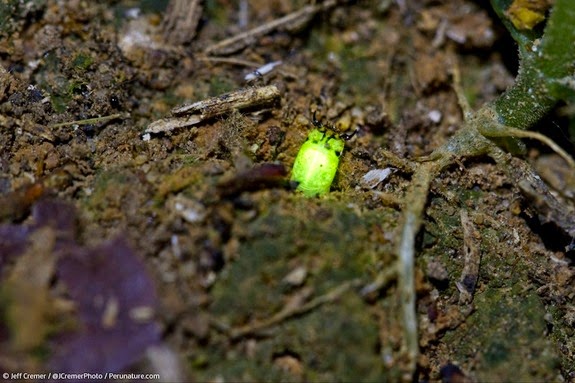
A mysterious glowing worm has been discovered lighting up the soil in the Peruvian rainforest.
The strange glow worms, which are thought to be the larval stage of an as-yet-unidentified species of beetle, may use their phosphorescence to lure unsuspecting flies and ants into their waiting, open jaws.

Ants or termites will "fly right into their jaws, and then they'll just clamp shut and that's their meal," said Aaron Pomerantz, an entomologist who works with a rainforest expedition company at the Refugio Amazonas near the Tambopata Research Center in Peru, where the glowing larvae were discovered. 

In tests, the glow worms readily devoured stick insects and termites, Pomerantz said. Their style of attack seems similar to that of the enormous, man-eating worms in the 1990 campy movie "Tremors," albeit at a much smaller scale, he said.

"They're underground, and they burst from the earth," Pomerantz told Live Science.

Glowing earth

Nature photographer Jeff Cremer found the tiny pinpricks of light glowing in a wall of earth when he was working at a lodge in the Peruvian jungle. On closer inspection, Cremer discovered several dozen of these tiny insects, which measured about 0.5 inches (1.2 centimeters), shining green in the night.

Cremer brought them to the attention of entomologists who work at the rainforest nature lodge, who had never seen anything similar in the region.

The team determined that the worms were the larvae of an unknown species of click beetle. These beetles, which belong to the family Elateridae, use a fast popping or "clicking" motion to escape predators, Pomerantz said. Adults may feed on flowers and nectar, but the larvae are probably predatory.

There are more than 10,000 species of click beetles, including about 200 that are bioluminescent, meaning that they give off light. These strange little creatures may potentially be cousins of Brazilian fire beetles and could belong to the group of bugs called Pyrophorini, Pomerantz said.

Brazilian fire beetles burrow into termite mounds, creating ethereal, glowing towers at night, Pomerantz said. Though it's not exactly clear how the newly discovered insects produce light, similar creatures use a class of molecules known as luciferins to give off their ghostly yellow glow. Pyrophorini typically maintain a constant glow through the night, and may even shine brighter when a predator touches them.

Why they glow

Bioluminescent animals usually glow to either lure in prey or to warn predators that they contain noxious chemicals. But the glowing also occasionally serves other purposes. For instance, fireflies' blinking is essentially a come-hither signal for potential mates, Pomerantz said.

In the case of the click-beetle larvae, it seems the creatures glow to lure in prey, Pomerantz said. The Brazilian click beetles aggregate in termite mounds and glow to attract more prey.

Right now, the team isn't sure if it's discovered a completely new species or a new subspecies of an already known species of beetle larva, but the researchers are contacting experts in Brazil to find out, Pomerantz said.

Selengkapnya »»  

Photos: A Green Glow Worm from the Amazon

A few years ago, nature photographer Jeff Cremer discovered tiny pinpricks of glowing light in a wall of Earth in Peru. When he took a closer look, he discovered a mysterious species of glow worm. Cremer brought the glow worm to the attention of entomologists. It turned out that these little glowing worms were actually larvae of a beetle species. Though scientists still don't know the exact species, similar click beetles have been found in Brazil.

Night light

Cremer saw the first signs of the mysterious beetle in a wall of Earth near the Tambopata Research Center in the Peruvian Amazon. When he got a closer look, he found several dozen worms that were about 0.5 inches (1.27 centimeters) in length. 

Predatory worm

When entomologists took a look, they realized that the glow worms were larvae from a spcies of click beetles, which belong to the family Eliteredae. Click beetles typically make a clicking motion to quickly escape predators. Though over 10,000 of the beetles have been identified, only 200 are bioluminescent, or give off light.

Hungry predator
  
The beetle larvae likely glow green to lure prey such as ants and stick insets. When presented with these insects, the worms readily devoured them. While most beetles dine on flowers and other plant-matter, their larvae are mostly predatory. The insects wait with jaws open, and as soon as an ant or a termite flies in, their jaws clamp shut.

Bioluminescent relatives

Though no one knows exactly what species of click beetle they've found, the mysterious creature may be related to the Brazilian fire beetle. These fire beetles colonize termite mounds and create ethereal glowing towers in the night. These bizarre glowing mounds can be seen at Emas National Park in Brazil.

Visible insides

Like an X-ray, the bioluminescence lights up the digestive system and glands inside the larval body. Most bioluminescent species, including Brazilian fire beetles, glow because of a molecule known as luciferin, which may be produced inside the glands revealed here.

Family members

The team doesn't yet know if this is a completely new species of glow worm or a subspecies of click beetle related to the Brazilian fire beetles. They are currently consulting with experts in Brazil to find out. 

Attack!

The researchers likened the tiny but voracious larvae to the man-eating worms in the campy 1990 film "Tremors." Just like those monsters, these little glow worms lie in wait in the Earth and then emerge to clamp their jaws shut over ants or other insects. Of course, these larvae are unlikely to eat humans any time soon.

Many unknowns

The click beetle family, or Eliteredae, includes thousands of species, but the Pyrophorus group includes about 26 species that range from Mexico to the West Indies. Unlike other bioluminescent bugs, such as flickering fireflies, these predatory larvae are cosntantly glowing.         
Selengkapnya »»